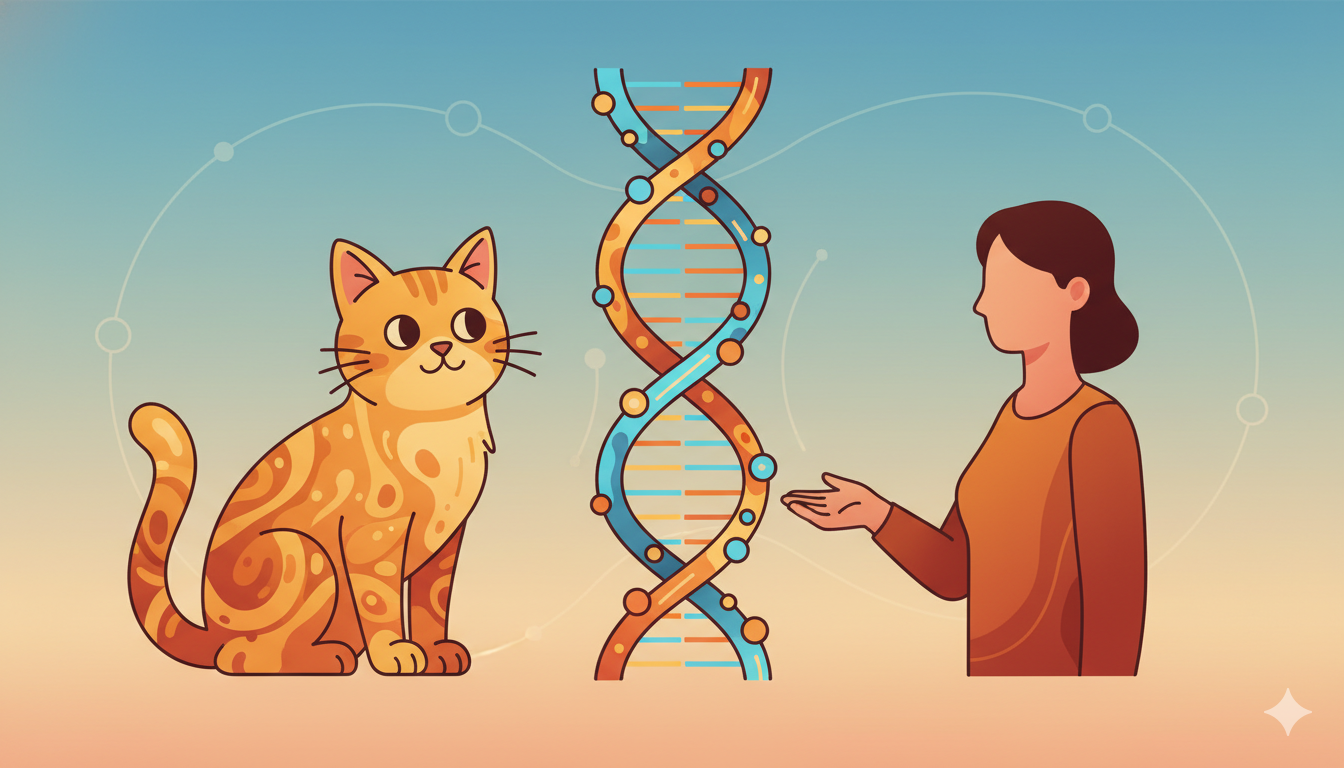
Landmark Study Reveals Striking Genetic Parallels Between Feline and Human Cancers
One in three cats will develop cancer in their lifetime, and cancer is a leading cause of death in cats over 10 years old. Comparative oncology research shows that feline tumors share over 90% of the genetic, molecular, and biological features of human cancers. TP53 mutations are found in 58% of feline oral squamous cell carcinomas and 27% of feline mammary carcinomas — comparable to the approximately 50% mutation rate seen in human cancers.

Ancient Cat Migrations: How Domestic Cats Spread from North Africa to Europe 2,000 Years Ago
The origins and European dispersal of domestic cats (Felis catus) have been traced in detail through ancient DNA analysis. A study analyzing 209 ancient cat specimens found that all domestic cats descend from the African wildcat (Felis silvestris lybica), first domesticated in the Near East 9,000–10,000 years ago. Two major dispersal waves followed: the first with Neolithic farmers (reaching Europe by 4400 BCE), and the second from Egypt along Roman Empire trade routes (1st millennium CE). The Egyptian-origin mitochondrial DNA haplogroup A was confirmed at the Viking trade port of Ralswiek, Germany, dated to 700–1000 CE.

SDMA: The Early Biomarker That Detects Cat Kidney Disease Before Symptoms Appear
Chronic kidney disease (CKD) affects 30–50% of cats over 10 years of age, making it one of the most common conditions in senior cats. The typical age of diagnosis is 9–13 years. Because kidneys compensate for function loss, symptoms often appear only after significant damage has occurred. Traditional serum creatinine only rises after 60–75% of kidney function is lost, while the newer biomarker SDMA (Symmetric Dimethylarginine) detects abnormalities at just 25% function loss. In a study of 88 cats, SDMA detected CKD an average of 17 months earlier than creatinine.

Cat Obesity and Arthritis: Why Weight Loss Is the Most Effective Treatment for Joint Pain
Feline obesity is a critical health issue — 59.5% of U.S. cats are classified as overweight or obese (AVMA, 2018). Excess body weight places chronic mechanical stress on joints, dramatically increasing osteoarthritis (OA) risk. Radiographic OA is found in 60–61% of cats over 6 years and 82% of cats over 14 years. However, because cats hide pain, clinical pain signs are detected in only 30% of cats with radiographic OA. Weight loss of just 5–10% significantly improves joint pain and mobility, and reducing caloric intake by 20% is an effective starting point for weight management.

How Cortisol Monitoring Reveals Hidden Stress in Cats: Blood, Saliva, Urine, and Hair Testing
Feline stress is a serious veterinary health issue. Chronic stress is linked to Feline Idiopathic Cystitis (FIC), anorexia, alopecia, and upper respiratory infections. FIC accounts for 50–70% of cats presenting with lower urinary tract disease signs. Objective physiological biomarkers are essential for stress measurement, with cortisol being the primary indicator. Different sample matrices measure stress over different timeframes: blood cortisol reflects stress within minutes, saliva within minutes to an hour, fecal cortisol metabolites (FCM) over 12–24 hours, and hair cortisol over weeks to months. A meta-analysis of 30 studies found fecal glucocorticoid metabolites (FGCM) were the most commonly used matrix (14 of 30 studies).