Cat Obesity and Arthritis: Why Weight Loss Is the Most Effective Treatment for Joint Pain
Feline obesity is a critical health issue — 59.5% of U.S. cats are classified as overweight or obese (AVMA, 2018). Excess body weight places chronic mechanical stress on joints, dramatically increasing osteoarthritis (OA) risk. Radiographic OA is found in 60–61% of cats over 6 years and 82% of cats over 14 years. However, because cats hide pain, clinical pain signs are detected in only 30% of cats with radiographic OA. Weight loss of just 5–10% significantly improves joint pain and mobility, and reducing caloric intake by 20% is an effective starting point for weight management.
Research Background
제시된 정보는 고양이 비만, 골관절염, 아디포카인, 염증, 체중 관리와 관련된 권위 있는 수의학 출처와 동료 검토 과학 논문을 종합한 체계적 문헌 검토를 통해 수집됐다. PubMed, 코넬 고양이 건강 센터, AVMA, iCatCare 등의 자료가 활용됐다. 역학적 통계와 임상 가이드라인에 초점을 맞췄으며, 체지방 측정을 위한 신체충실지수(BCS) 1~9 척도, 방사선 검사를 통한 OA 확인, ELISA 기법을 이용한 아디포카인 측정 등의 방법론이 포함된 연구들을 검토했다. 한계로는 연구마다 표본 집단과 진단 기준이 다르고, 원 연구의 방법론과 보고 기준에 의존해야 한다는 점이 있다.
Key Findings
- 1
59.5% of cats in the U.S. are overweight or obese — AVMA 2018 report, driven by indoor lifestyle and high-calorie food access
Source: American Veterinary Medical Association (AVMA)
- 2
Radiographic OA confirmed in 60–61% of cats over 6 and 82% over 14 — yet clinical pain signs detected in only 30%
Source: Cornell Feline Health Center; International Cat Care (iCatCare)
- 3
Weight loss of just 5–10% significantly improves joint pain and mobility — making weight management the cornerstone of OA treatment
Source: International Cat Care (iCatCare)
- 4
Obese cats show increased secretion of pro-inflammatory adipokines: leptin, TNF-α, IL-6, resistin, visfatin, MCP-1 from adipose tissue
Source: PubMed (Veterinary Journal, Elsevier) (PMID: 30588647)
- 5
Reducing caloric intake by 20% is an effective starting point for weight loss — BCS 4–5 (on 1–9 scale) is ideal body condition
Source: Cornell Feline Health Center; AVMA
How It Works
The link between obesity and osteoarthritis involves both mechanical stress and systemic inflammation. Excess body weight places chronic mechanical load on joints, accelerating articular cartilage degradation. Beyond this physical impact, adipose tissue — especially visceral fat — functions as an active endocrine organ secreting bioactive molecules called adipokines. In obese states, pro-inflammatory adipokines (leptin, TNF-α, IL-6) increase, promoting a chronic low-grade inflammatory state throughout the body. In joints, these inflammatory mediators directly contribute to cartilage and synovial tissue breakdown, stimulate nociceptors (pain receptors), and inhibit chondrocyte repair mechanisms — intensifying pain and accelerating OA progression.
What This Means for Cat Owners
Recognizing and addressing obesity and pain in your cat requires vigilance because cats expertly hide discomfort. Watch for subtle pain signals: reduced activity (less jumping or playing), changes in grooming habits, difficulty using the litter box, irritability, or stiffness after rest. Regularly check your cat's body condition score and weight at home to catch weight gain early. If you suspect overweight or pain, schedule an immediate veterinary visit. Ask your vet: "What is my cat's ideal weight and how do we safely achieve it?" and "What enrichment activities or dietary changes can help?" Implementing a vet-prescribed weight loss plan with measured portions and appropriate exercise is essential — even a 5–10% weight reduction can dramatically reduce joint pain.
Osteoarthritis Prevalence and Pain Expression by Age
| Age | Radiographic OA | Clinical Pain Signs | Obesity Risk |
|---|---|---|---|
| Over 6 years | 60–61% | Expressed in only 30% | Moderate |
| Over 12 years (Cornell) | 90% | Expressed in only 30% | High |
| Over 14 years (iCatCare) | 82% | Expressed in only 30% | High |
| Obese cats (all ages) | Dramatically increased risk | Even lower expression rate | 100% (by definition) |
⚠️ Warning Signs
Cats are experts at hiding pain. These subtle signals may indicate arthritis or obesity-related joint pain.
- •Reduced or avoided jumping to elevated surfaces (sofa, bed)
- •Less interest in play, losing interest in toys
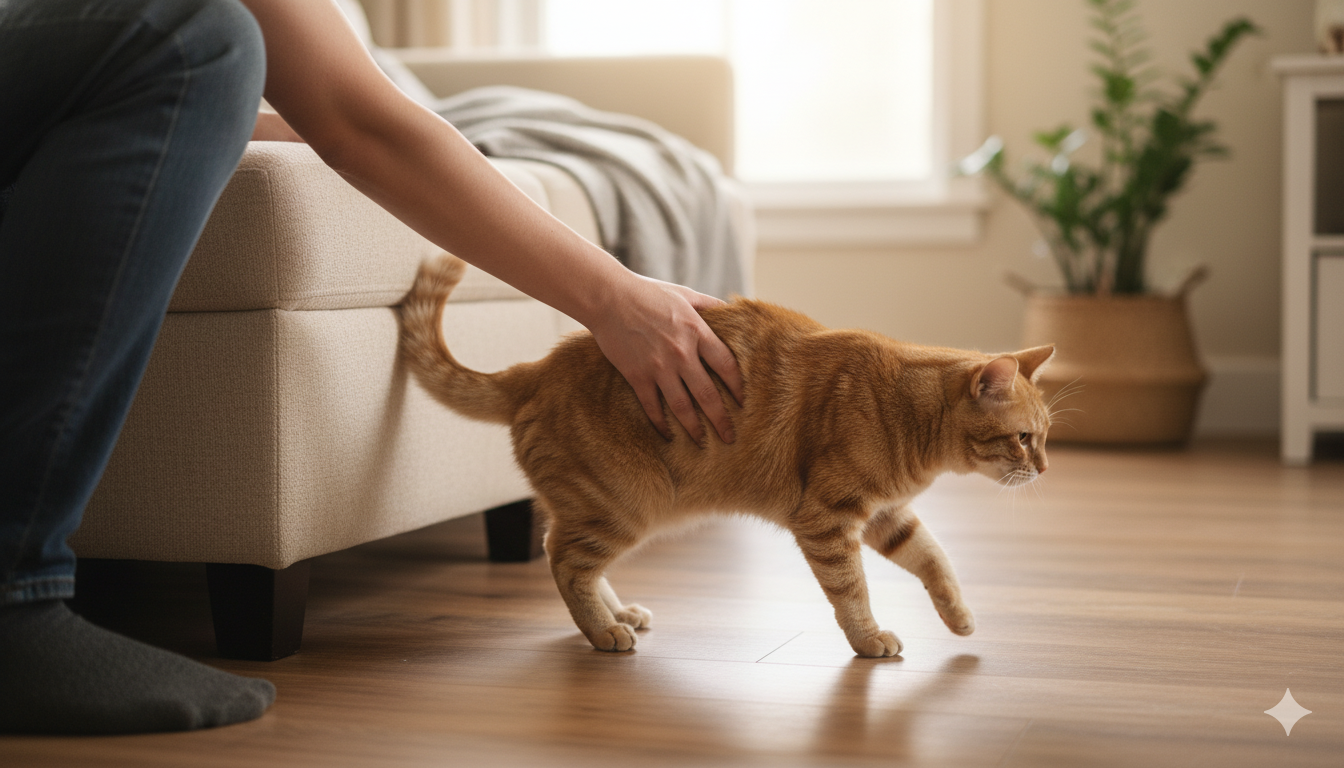
- •Reduced grooming or difficulty grooming back and tail area
- •Stiffness after sleeping, moving slowly upon waking
- •Difficulty stepping into litter box (crouching outside or accidents)
- •Sudden aggression when touched in previously non-reactive areas (pain response)
- •BCS 6+: Visible flank fat, ribs difficult to feel on palpation
Owner Checklist
- ✓Weekly weigh-in + self BCS assessment (recommend regular vet weight checks)
- ✓Measure food by weight: use kitchen scale instead of cups (±5g precision)
- ✓Set daily calorie target → start with 20% reduction after vet consultation
- ✓Limit treats: keep below 10% of daily calorie intake
- ✓Low-impact exercise: laser pointer, wand toys, 5 min × 3 sessions/day
- ✓Switch to low-entry litter box for easier access (arthritis consideration)
- ✓Assess pain improvement with vet after 5–10% weight loss achieved
Journal: Cornell Feline Health Center / AVMA / International Cat Care / PubMed (Veterinary Journal)
Year: 2025
Institution: Cornell University College of Veterinary Medicine / AVMA / iCatCare