Feline Upper Respiratory Infection - Cat Cold Symptoms & Care
Learn about cat cold symptoms, causes, treatment, and how to care for affected cats.
What is Feline Upper Respiratory Infection?
Upper respiratory infection (URI) affects a cat's nose, nasal passages, and throat. Commonly called "cat cold," herpesvirus (FHV-1) and calicivirus (FCV) account for 80–90% of cases. Most cats recover in 1–2 weeks, but kittens and immunocompromised cats face complication risks.
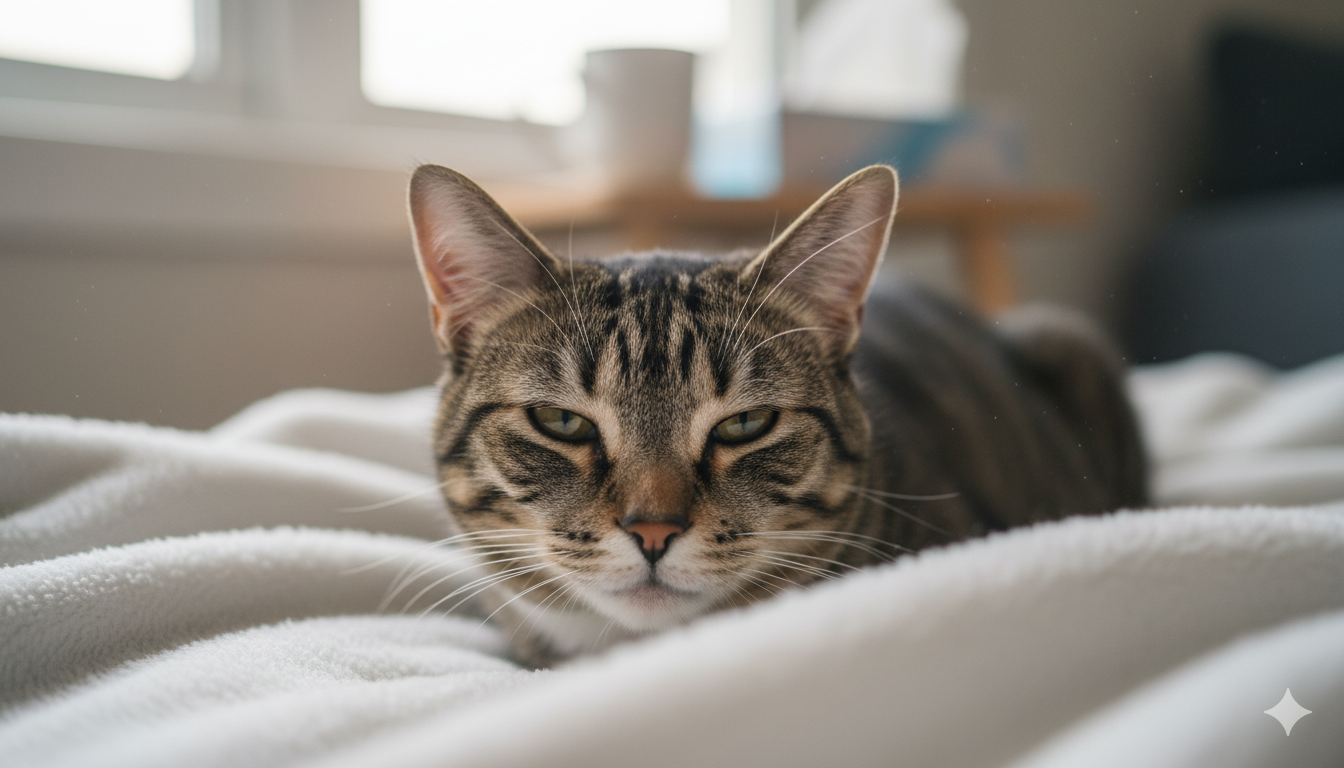
Feline Upper Respiratory Infection
Comparison by Cause
| Category | Herpesvirus (FHV-1) | Calicivirus (FCV) | Chlamydia |
|---|---|---|---|
| Type | Virus | Virus | Bacteria |
| Main symptoms | Sneezing, discharge, conjunctivitis, corneal ulcers | Mouth ulcers, sneezing, fever | Eye discharge, conjunctivitis |
| Recurrence | Lifelong; recurs with stress | Can fully recover | Recovers with antibiotics |
| Treatment | Famciclovir, supportive care | Symptom management | Doxycycline, azithromycin |
| Vaccine | Included in FVRCP | Included in FVRCP | Optional in some regions |
Main Symptoms
- Sneezing (frequent and forceful)
- Nasal discharge (clear → yellow/green = secondary infection)
- Eye discharge and conjunctivitis
- Loss of appetite (can't smell food)
- Fever (39–40°C)
- Lethargy and reduced activity
Treatment & Home Care
- Maintain humidity (40–60%): humidifier or steam helps nasal congestion
- Clean eye/nose discharge: gently wipe with warm water
- Warm aromatic food: helps stimulate appetite (warm it up)
- Adequate fluids: wet food or plain chicken broth
- Antibiotics for secondary infection: yellow/green discharge needs vet prescription
When to See a Vet
See a vet if: no appetite for 3+ days, can't open eyes, severe mouth ulcers, breathing difficulty, or symptoms in kittens under 8 weeks. Dehydration and secondary pneumonia can develop quickly.
Medical Disclaimer
⚠️ Most URIs resolve naturally, but severe cases or kittens need veterinary care. This article is for informational purposes and does not replace professional diagnosis.
Want to learn more? Check out our feline herpesvirus guide.