Ringworm in Cats - Fungal Infection, Symptoms & Treatment
Treat feline ringworm with antifungal medications and proper quarantine procedures.
What is Ringworm in Cats?
Feline ringworm (dermatophytosis) is a fungal infection, not a worm. The main cause is Microsporum canis, responsible for ~90% of cases worldwide. The "ring" in ringworm refers to the circular lesion shape, not any worm. Multi-cat households, kittens, and immunocompromised cats are most susceptible.
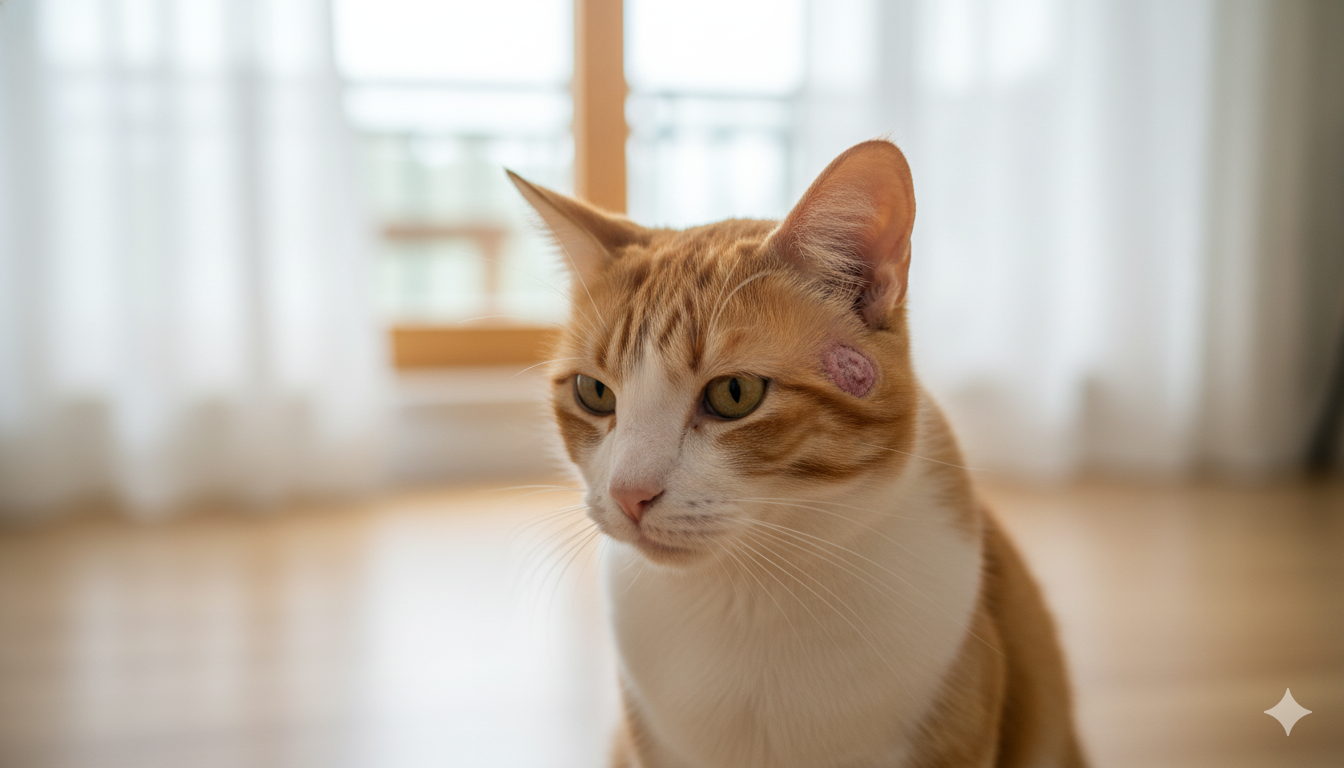
Cat Ringworm
How Ringworm Spreads
- Direct contact: skin or fur contact with infected cats
- Indirect contact: shared bedding, brushes, or toys
- Environment: spores survive in the environment for months
- Zoonotic: cats can transmit to humans (especially children and immunocompromised individuals)
Symptoms
- Circular alopecia — most common on head, ears, and forelimbs with well-defined borders
- Scaly skin — affected areas look crusty or scaly
- Redness and inflammation — skin may appear red or mildly swollen
- Itching — often mild, but scratching increases with severity
- Broken hair shafts — fur becomes brittle and breaks easily
- Asymptomatic carriers — some cats carry the fungus without visible symptoms and still spread it
Diagnosis
Three diagnostic methods: Wood's lamp (about 50% of M. canis glows green — not fully reliable alone); microscopy (hair/skin scraping examination); and DTM fungal culture (most accurate, takes 7–14 days). All cats in the household should be tested when one is positive.
Treatment
- Oral antifungals: Itraconazole or Terbinafine for 4–10 weeks — the most effective approach
- Topical antifungals: Clotrimazole, miconazole applied to localized lesions
- Antifungal shampoo/dip: Enilconazole or miconazole/chlorhexidine shampoo twice weekly to reduce environmental contamination
- Clipping affected hair: reduces spore dispersal and improves topical treatment penetration
Quarantine and Decontamination
Isolate in a separate room during treatment. Environmental decontamination is critical for preventing reinfection. Use diluted bleach (1:10) or enilconazole solution on surfaces, bedding, and toys. Vacuum regularly and immediately discard bags. Treatment completion requires two consecutive negative cultures.
Treatment Duration and Prognosis
Healthy adult cats may self-cure within months without treatment, but treating accelerates recovery and reduces transmission risk. Most cats recover in 6–12 weeks with treatment. Kittens and immunocompromised cats may need longer treatment.
| Condition | Cause | Lesion Pattern | Zoonotic |
|---|---|---|---|
| Ringworm (Dermatophytosis) | Fungus (Microsporum) | Circular alopecia, scales | Yes (zoonotic) |
| Demodicosis | Mite (Demodex) | Alopecia around eyes/muzzle | Rarely |
| Feline skin allergy | Allergen hypersensitivity | Widespread alopecia, erythema, severe itch | No |
| Food allergy dermatitis | Dietary antigen | Head/neck lesions, intense pruritus | No |
| Bacterial folliculitis | Bacteria (Staphylococcus) | Pustules, papules | No |
Preventing Ringworm at Home
- Quarantine new cats for 2 weeks before introducing to the household
- Regular brushing and monthly skin checks for early detection
- No sharing of brushes, bedding, or food bowls between cats
- Support immune health with stress reduction and balanced diet
Sources & References
- Cornell Feline Health Center - Ringworm
- AVMA - Dermatophytosis
※ This article is for informational purposes only. Consult a veterinarian for accurate diagnosis and treatment.