How Cat Litter Type Affects Urinary Health
Compare bentonite, tofu, and cassava litter types. Learn how to choose the right litter for cats with urinary conditions.
Why Does Litter Choice Matter?
Litter type can actually impact your cat's urinary health more than you'd think. Dusty or heavily scented litter can make cats avoid the box — and for cats with urinary issues like crystals or cystitis, that avoidance makes everything worse.
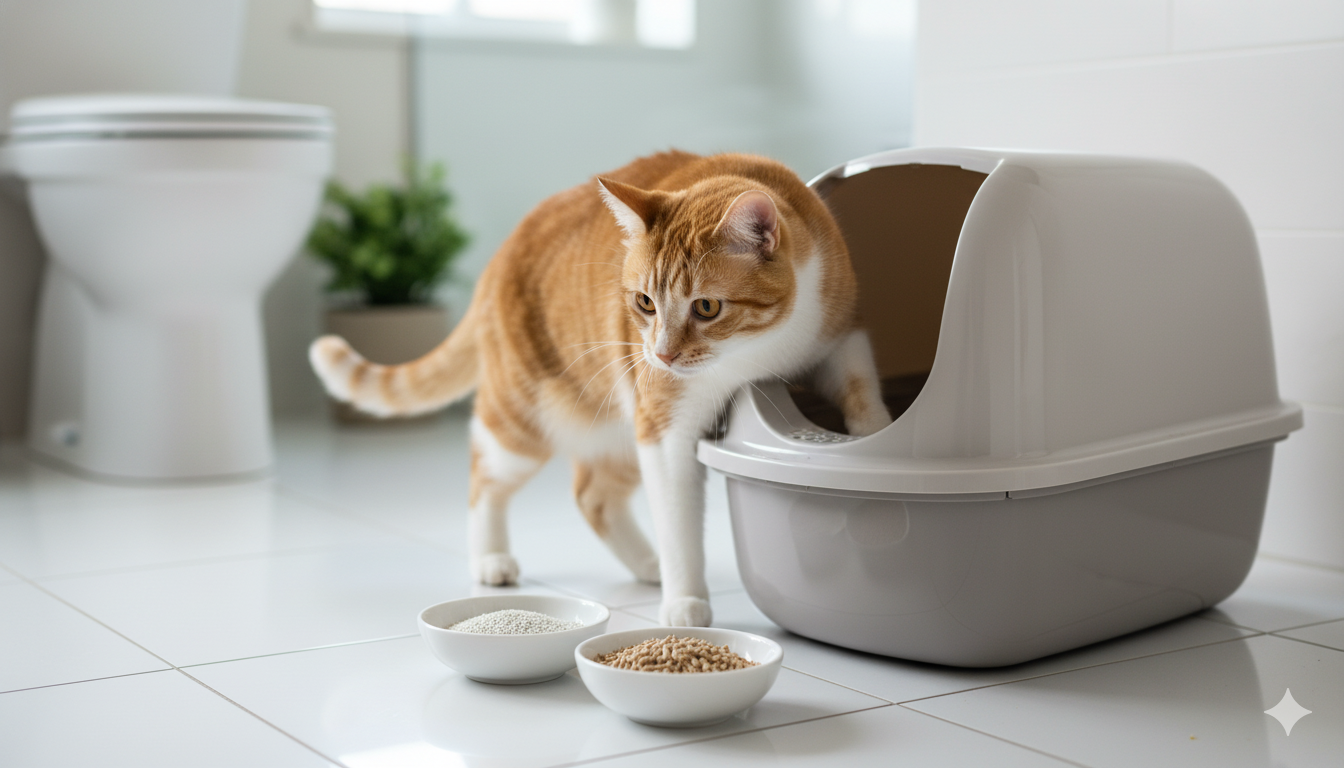
Cat Litter Type Comparison
Comparison of Major Litter Types
| Item | Bentonite | Tofu | Cassava |
|---|---|---|---|
| Clumping | Very strong | Moderate | Moderate-Strong |
| Dust | High (respiratory concern) | Low | Low |
| Odor control | Excellent | Moderate | Moderate |
| Urinary irritation | Possible dust irritation | Low | Low |
| Change frequency | 2-3 weeks | 1-2 weeks | 1-2 weeks |
| Price | Low | Medium | Medium-High |
| Eco-friendly | Low | High | High |
Bentonite (Clay Litter)
Clumping and odor control are hard to beat — it's the most popular type for a reason. But the downside is dust. High-dust litter can irritate cats with respiratory sensitivity. Not recommended for kittens under 6 months either (ingestion risk). For urinary cats, look specifically for dust-free options.
Tofu Litter (Soy-based)
Natural, low-dust, and non-toxic if accidentally ingested — great for kittens and curious cats. It's a popular choice for cats with urinary issues because it's gentle on the system. Clumping is slightly weaker than bentonite and needs more frequent changes, but the quick moisture absorption makes it easy to spot changes in urine color or volume.
Cassava Litter (Tapioca-based)
Similar to tofu litter — natural, low-dust, and gentle. Clumping tends to be a bit stronger and odor control is decent. It's eco-friendly and biodegradable, which is a plus. The main downside is the higher price point.
Litter Selection for Cats with Urinary Disease
- Look for dust-free products first — dust can irritate both the urinary tract and respiratory system
- Go unscented — fragrances can make sensitive cats avoid the box entirely
- Light-colored litter makes it easier to spot blood in urine or changes in volume early
- Add more litter boxes — urinary cats need easy, frequent access
- Clean the box often — dirty litter causes cats to hold urine, which raises the risk of stones
Tips for Switching Litter
Switching litter cold turkey can make cats refuse the box. Mix old and new litter over 7–10 days, gradually shifting the ratio. If avoidance continues even after transitioning, talk to your vet.
Sources & References
- Cornell Feline Health Center - Feline Lower Urinary Tract Disease
- International Cat Care - Litter Box Management
- American Association of Feline Practitioners - Environmental Needs
※ This is educational content — not a substitute for veterinary advice. If urinary symptoms show up, see your vet.
Want to learn more about cat urinary health?