← Back to BlogHealth
Feline Dermatitis Complete Guide - 4 Types Compared, Cause-Based Home Care & Severity Checklist
Compares 4 types of feline dermatitis (allergic, contact, fungal, parasitic) with cause-specific home care and a veterinary consultation checklist.
Mar 10, 2026
What is Feline Dermatitis?
Feline dermatitis is a cluster of symptoms — itching, hair loss, and skin lesions — caused by skin inflammation. According to the Merck Veterinary Manual, dermatitis has many causes, and the same symptoms need different treatments depending on the root cause. Treat the symptoms without finding the cause and it will keep coming back.
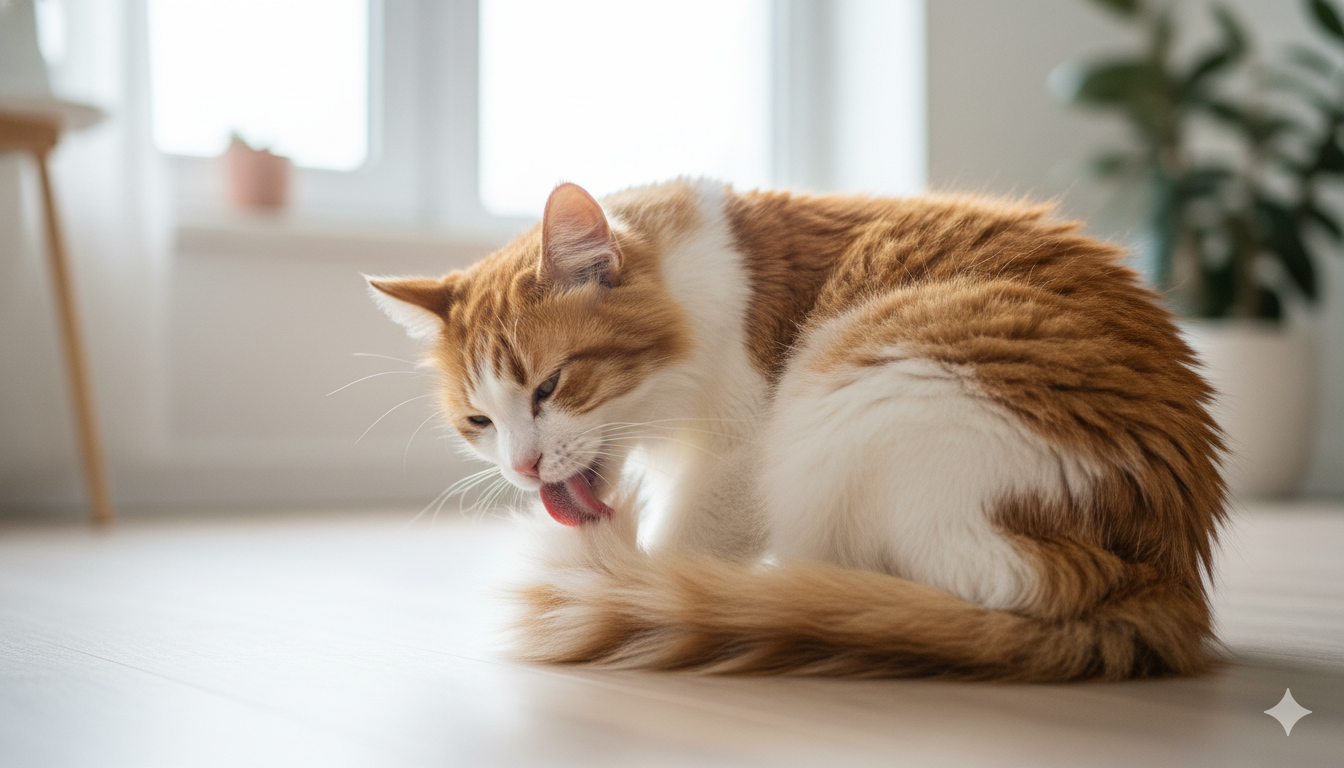
Feline Dermatitis
4 Types of Feline Dermatitis Compared
| Type | Main Cause | Key Symptoms | Common Location | Diagnosis |
|---|---|---|---|---|
| Allergic | Food allergy, environmental allergens | Full-body itching, excessive licking | Belly, armpits, groin | Elimination diet, skin test |
| Contact | Chemicals, detergents, plants | Redness, blisters, localized hair loss | Contact areas (paws, chin) | History, response to removing irritant |
| Fungal (ringworm) | Microsporum canis, etc. | Circular hair loss, scaling, crusts | Face, ears, forelimbs | Wood's lamp, culture test |
| Parasitic (fleas, mites) | Flea saliva allergy, ear mites | Tail-base itching, black debris | Tail base, neck, ears | Flea comb test, microscopy |
Severity Checklist
| Symptom | Mild | Moderate | Severe (Immediate vet) |
|---|---|---|---|
| Licking/scratching frequency | Occasional | Dozens/day | Self-injury level |
| Hair loss | None | Small patches | Widespread loss |
| Skin condition | Slight redness | Crusts, scaling | Open wounds, discharge |
| Appetite change | Normal | Slightly reduced | Refusing food |
Home Care by Cause
| Cause | Immediate Home Actions | Long-term Management |
|---|---|---|
| Food allergy | Switch to single-protein prescription food | Maintain elimination diet 8–12 weeks |
| Fleas | Apply flea treatment immediately, clean environment | Monthly preventive treatment |
| Contact irritant | Remove suspected irritant (perfume, detergent, diffuser) | Switch to fragrance-free products |
| Dry environment | Humidifier, omega-3 supplement | Maintain indoor humidity 40–60% |
When Veterinary Care is Required
- Symptoms lasting or worsening for 2+ weeks
- Circular hair loss with scaling — ringworm suspected
- Open wounds or discharge appearing on skin
- Scratching or licking at self-injurious levels
- Multiple cats showing symptoms in a multi-cat home — possible contagion
Skin health is closely tied to weight and nutrition. See where your cat stands with the BMI Checker.
※ This article is for informational purposes only. Always consult a licensed veterinarian for diagnosis and treatment.